Notes on getting work done by agents
Comparisons, prices as of this month, and what actually works when you hand a task to an AI agent. Written by the people who build and test them.

How to Update an AI Agent When Your Process Changes
Processes change. New CRM field, new approver, new review step, new tool. The agent that was right last quarter is silently wrong this quarter, and the gap shows up as runs that look fine on the surface but produce…
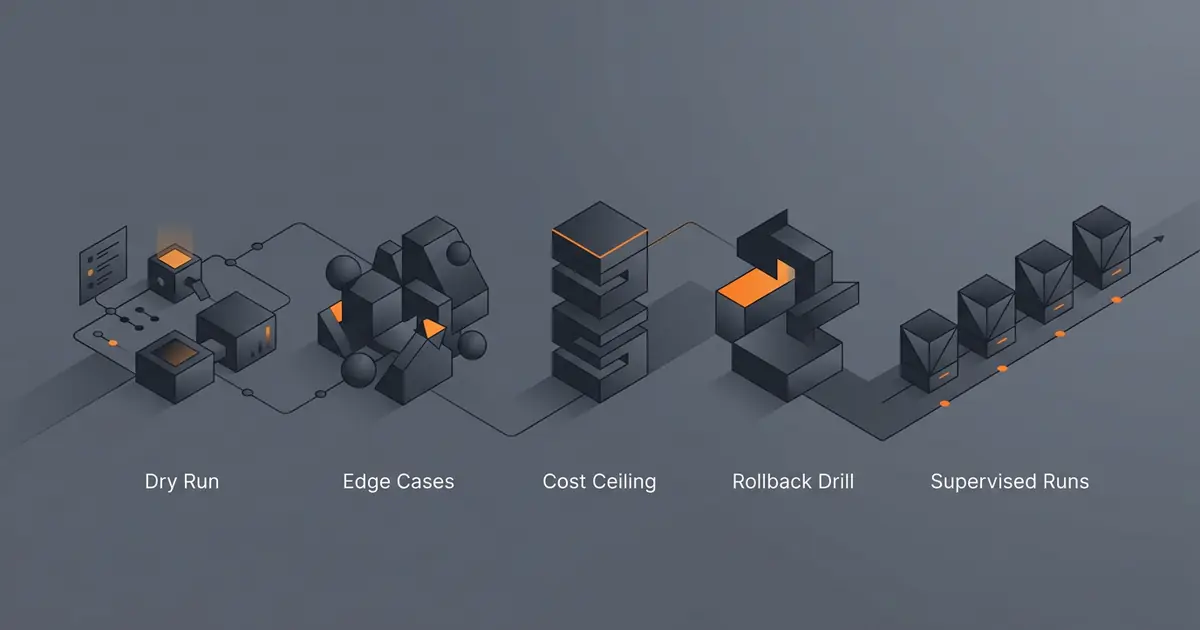
How to Test an AI Agent Before You Deploy It
An AI agent that has not been tested is an AI agent waiting to do something embarrassing or expensive on your behalf. Testing an agent looks different from testing software because the agent does not have a fixed…

How to Restrict an AI Agent to Business Hours
Restricting an AI agent to business hours is one of the cheapest reliability wins available. Most agent incidents are not catastrophic; they are awkward. An automated follow-up arriving at 3 a.m. looks like spam. A…

Build vs Buy an AI Agent: A Four-Axis Decision Framework
Build vs buy is the wrong opening question for AI agents. The right opening question is: what would have to be true for either answer to be obvious. The four-axis framework that follows (cost, time, capability,…

Autonomous vs Assistive AI: The Spectrum, Not a Binary
Autonomous AI and assistive AI are usually discussed as if they are different products. They are not. They are different points on the same spectrum, and the spectrum has five measurable axes: decision-making,…

AI Agent for Weekly KPI Reports From Your Stack
The Monday morning KPI summary is the report that should be automated and almost never is. The data exists. The query exists. The template exists. What is missing is the half-hour every Monday that somebody spends…

AI Agent Tool Use Explained: Function Calling, Selection, Recovery
Tool use is what separates a chatbot from an agent. A chatbot talks about sending the email; an agent calls the email-send tool and watches for the result. The mechanism under tool use is function calling,…

AI Agent Reasoning vs Pattern Matching: What Agents Actually Do
Whether AI agents "reason" is a debate that often misses the practical point. The practical point is that different reasoning patterns produce different reliability characteristics on different tasks.…

AI Agent Orchestration Explained: Planner, Executor, Evaluator
Orchestration is the runtime layer that coordinates multi-step agent execution. The LLM thinks; the orchestration decides which step runs next, retries when something fails, evaluates whether the goal is met, and…

AI Agent Myths and Reality: 8 Claims, Debunked
The discourse around AI agents in 2026 carries a lot of myths. Some come from vendor marketing; some come from social-media hot takes; a few are honest misunderstandings of fast-moving terminology. This post takes…
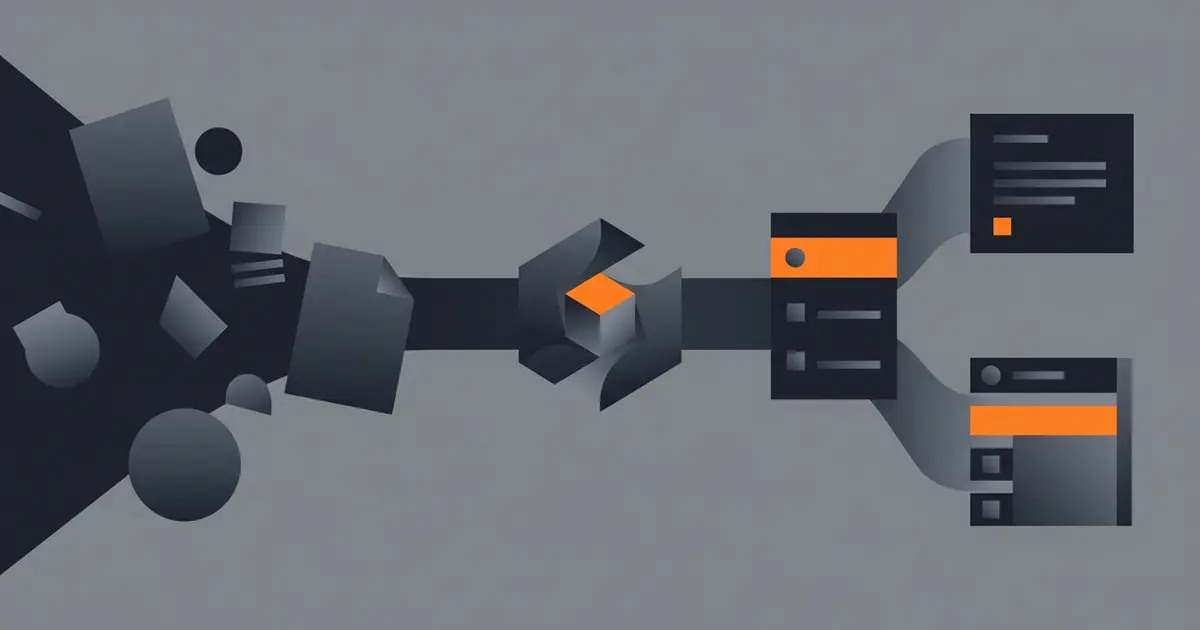
AI Agent for Meeting Follow-Ups: From Notes to Tasks
The post-meeting half hour is the most common place where good intent dies. People agreed to do things; nobody captured who, by when, or what exactly. The follow-up email never goes out. The action items never become…
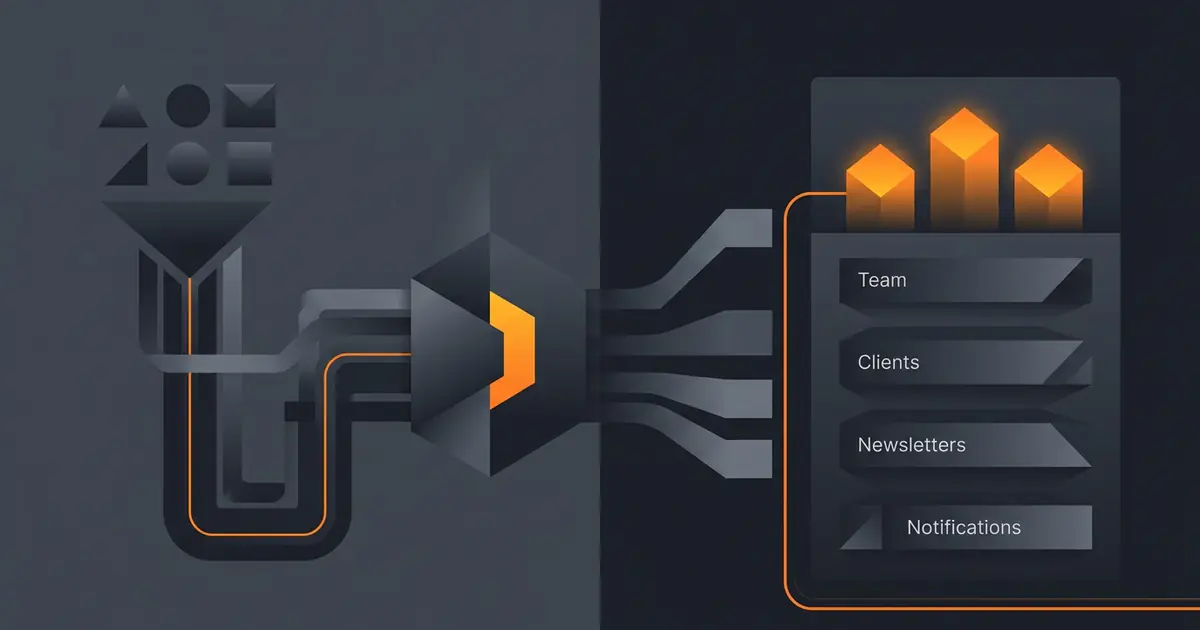
AI Agent for Inbox Triage: Setup and 30-Day Reality Check
An inbox triage agent is the most popular first agent for a reason. The job is well-defined (read inbox, produce a summary), the failure mode is mild (a wrong summary, not a wrong send), and the value is immediate…
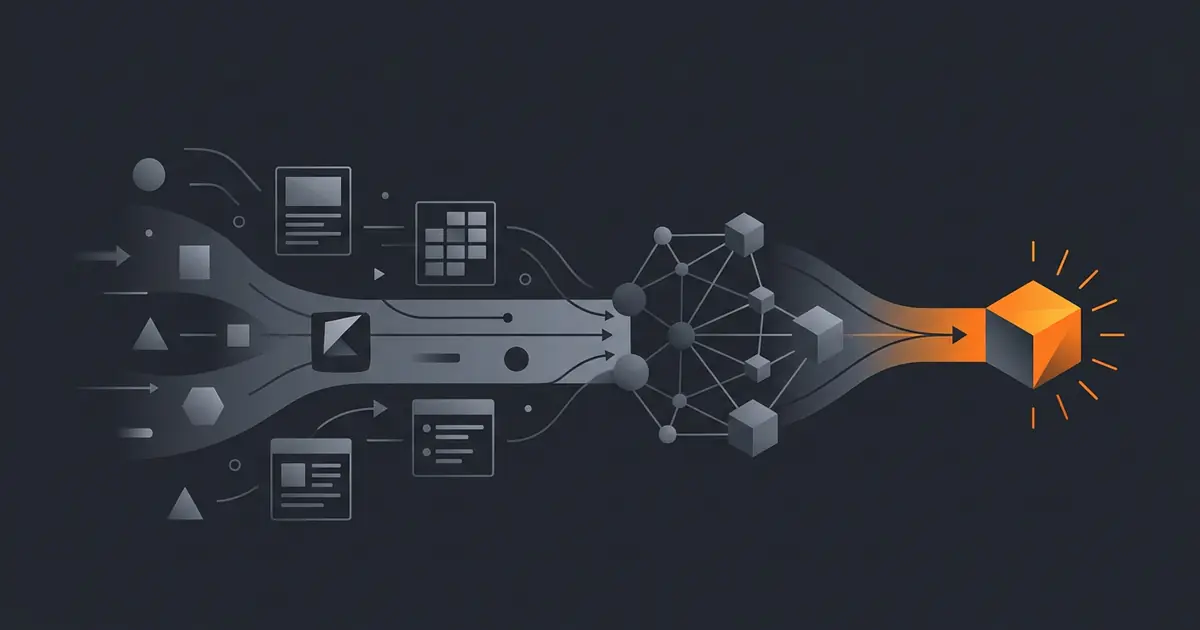
AI Agent for Competitor Tracking: A Practical Setup
Competitor tracking is the use case where the agent shape really pays off. The work is repetitive (read public pages on a schedule), the inputs are stable (a known list of URLs and accounts), the failure mode is mild…

The Honest Cost of Three Shutdowns: A Founder Financial Postmortem
Founders almost never publish the dollar number. The number is uncomfortable, the breakdown is more uncomfortable, and the opportunity cost is the most uncomfortable line of all. So this post does the uncomfortable…
How to Write a Prompt for a Recurring AI Agent (That Won't Drift)
One-shot prompts and recurring agent prompts look the same on the page and behave differently in practice. A one-shot prompt runs once; you see the output; you re-prompt if it is wrong. A recurring agent prompt runs…

How to Stop an AI Agent Mid-Task (Without Breaking State)
An agent stopped mid-task is not the same as an agent that finished. If the agent has already taken some actions and not others, the world is in an inconsistent state. A flight booked, a hotel not yet booked. A label…
How to Roll Back an AI Agent's Action
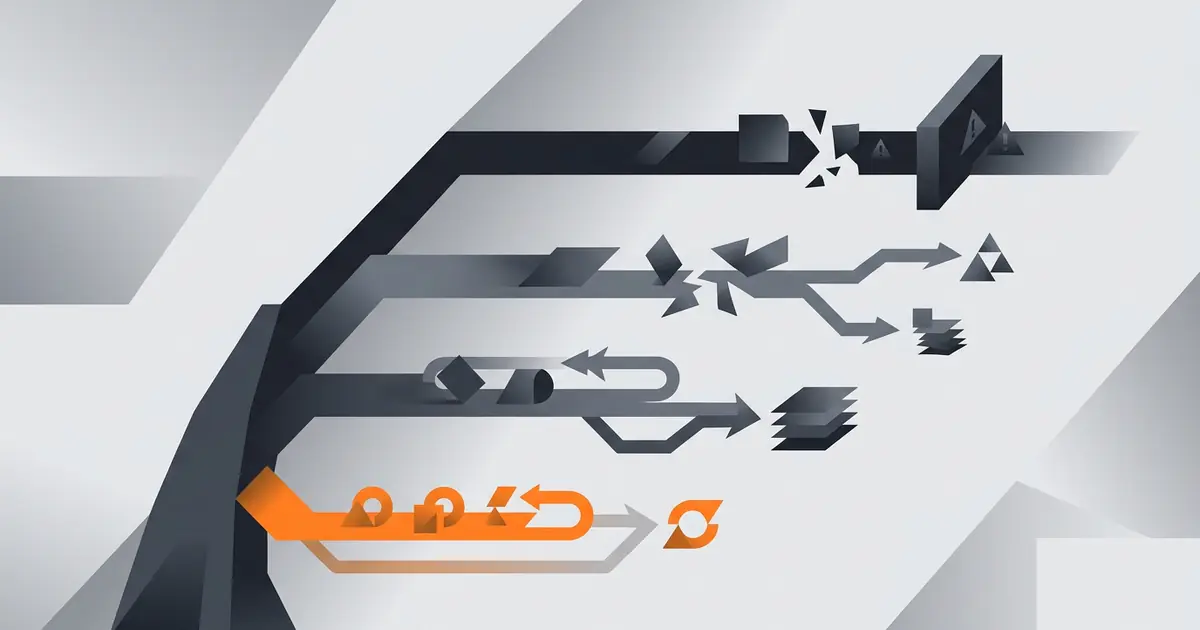
"Roll back the agent's action" is not one operation. It is four operations, each appropriate for a different tier of action. Treating all rollbacks as equal leads to over-engineered Tier 1 actions and…

How to Monitor What an AI Agent Is Doing
Code fails loudly. An exception is thrown, the process crashes, the error reaches the dashboard, the operator gets an alert. AI agents fail differently. The agent picks a wrong interpretation, takes a wrong action,…

How to Migrate from Zapier to an AI Agent (Without Breaking Anything)
Zapier and AI agents solve overlapping problems with different mental models. Zapier is trigger-step-action: a fixed pipeline that runs the same way every time. AI agents are outcome-driven: the agent picks the…

How to Limit What an AI Agent Can Do (Blast Radius Control)
An agent that fails small is a fixable problem. An agent that fails catastrophically is a customer-trust event, a financial loss, or both. The difference is blast-radius control: the set of limits that bound what the…

How to Give an AI Agent Access to Your Email Safely
Email is the master credential. Most accounts route password resets through it; many financial accounts treat email-confirmed-this as proof of identity. Granting an AI agent access to email is the most consequential…
How to Debug an AI Agent That Did the Wrong Thing
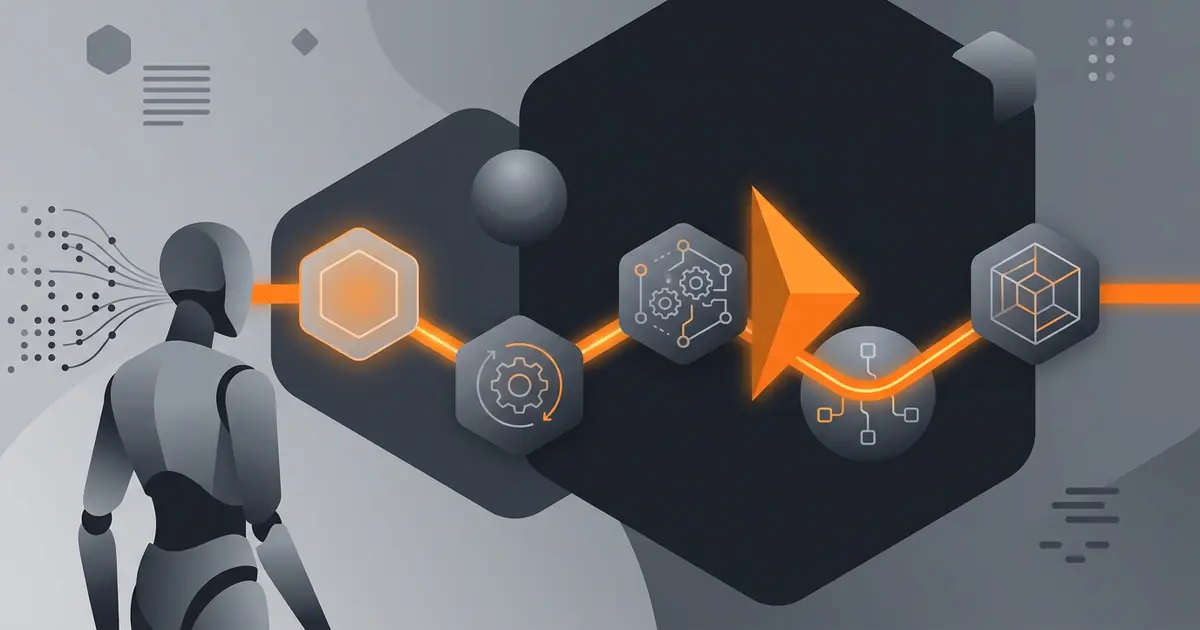
Agent failures look like bugs but behave differently. A traditional code bug is deterministic; the same input always produces the same wrong output. An agent failure is a decision the agent made on an input where…

AI Agent vs Copilot: Active Autonomous vs Passive Assistive
"Copilot" and "agent" are now used interchangeably in marketing copy, which makes the buyer's job harder. The two categories are different. A copilot helps a person do their work; an agent does the work and reports…

AI Agent vs Chatbot vs Assistant: The Structural Differences (2026 Guide)
The terms "AI agent", "chatbot", and "assistant" are used interchangeably by vendors and inconsistently by buyers. The result is that procurement decisions get made on the basis of marketing copy rather than on the…

Why Bootstrapping, Not VC: A Founder's Decision Rationale After Three Shutdowns
The most common question I have been asked since Gravity went public is some version of: why are you not raising? After three shutdowns and a clean fourth bet, the assumption is that VC capital is the next move. The…

What I Learned From Killing a $100K Product (The Hardest Shutdown)
The hardest shutdown across all three startups was the one with revenue attached. Specifically, the $100K-annual-run-rate slice of Super AI that was working in 2025 even as the surrounding product was structurally…

The 3X-Bigger-Than-the-Feature-X Rule (And Why 1.3X Always Loses)
The 10x rule from Zero to One applies at the product level: the whole product needs to be 10x better than the closest alternative for users to switch (Volt Equity, Thiel 10x rule). It is well-known and widely cited.…

The Mistakes I Made With Super AI: A Founder's Decision Postmortem
The public version of the Super AI postmortem is on this site already (read it here). It explains the structural failure: an all-in-one AI router built in 2024, killed in March 2025, in a category that was getting…

Building in Bangalore, Not SF: Geography and Cost After Three Shutdowns
Aryan Agarwal, building Gravity, from Bangalore. The default assumption when a 3x founder builds an AI agent platform is San Francisco. The default assumption is wrong for this company; it is also probably wrong for…

Why I'm Betting Against Workflow Platforms in 2026 (Timing Argument)
This is a timing post, not a thesis post. The thesis lives in describe outcome, not workflow,workflow editors are the wrong abstraction once intelligence has moved into the system. This post is the narrower question:…