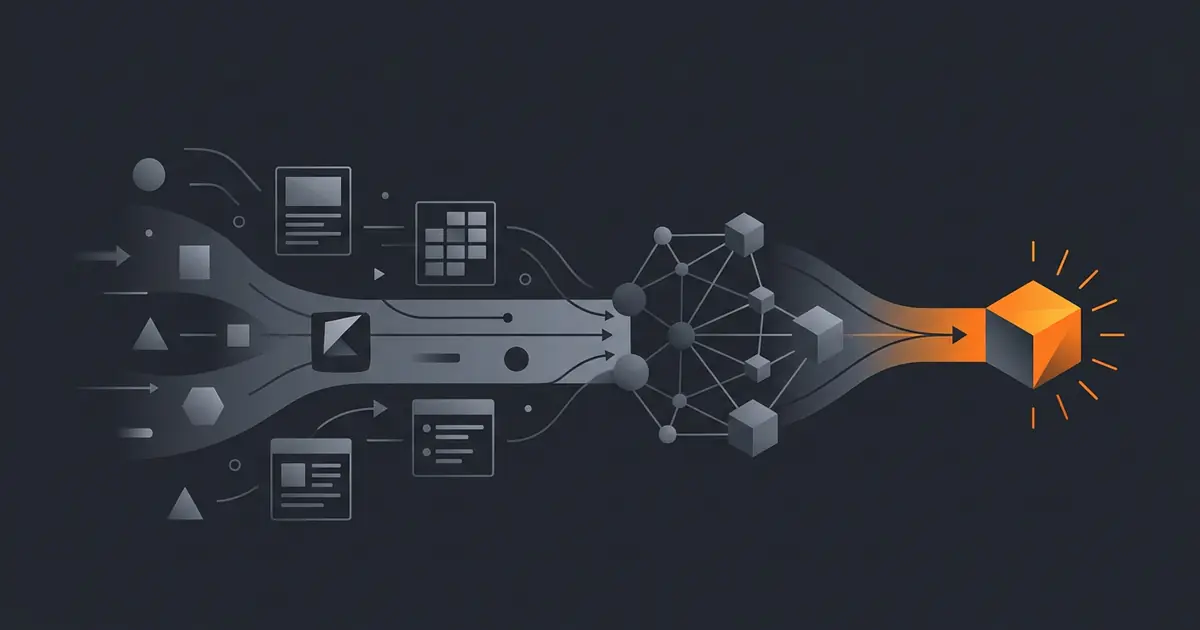
Competitor tracking is the use case where the agent shape really pays off. The work is repetitive (read public pages on a schedule), the inputs are stable (a known list of URLs and accounts), the failure mode is mild (a missed announcement), and the value is concentrated (you don't read fifty pages every week). Most teams do this manually, badly, or not at all. The agent does it automatically, well, and on a schedule.
This setup is a read-only digest agent: watch a fixed list of sources, detect changes, summarise the ones that matter, deliver weekly. The agent does not write reactions or post anywhere. It produces signal; humans decide.
What this agent does
The agent maintains a watch list of URLs and accounts. Each day, it checks each source and stores the current content. It compares to last run's content, identifies what changed, classifies the changes (positioning, pricing, launch, leadership, etc.), and writes a record. Each week, it emits a summary that ignores the noise and highlights the signal.
The agent does not draft responses. It does not push items to your CRM. It does not auto-update any battlecard. The output is a digest delivered to a Slack channel or an email, with links back to the source for verification.
For the broader use-case framing, see what an AI agent can actually do and how to set up your first AI agent.
Five sources to watch
- Blog. Positioning, narrative, hires, customer stories. The earliest signal of strategic shift.
- Changelog or release notes. Where the product is actually moving. Often more honest than the blog.
- Pricing page. Commercial moves are slow but consequential. Track structural changes (new tier, removed tier, new floor).
- Founder or VP social. X and LinkedIn. Hires, big-customer wins, and rebuttals to your messaging tend to surface here first.
- Review sites. G2, Capterra. The voice of customer that the company itself cannot fully control.
Add a search-engine watch on "competitor launch" or "competitor pricing" for major announcements that bypass the watched sources. The cost is small and the catch rate on big news is high.
What counts as a change that matters
Most page edits are noise. Style updates, broken-link fixes, copy refreshes, date stamps. The agent should ignore those. The categories that matter:
- Pricing. New tier, removed tier, new floor or ceiling, shift in what is included.
- Launches. A blog post or changelog entry that announces a new feature or product line.
- Leadership. A hire or departure on the leadership team. Mentioned on the blog or surfaced via LinkedIn.
- Customer movement. A named customer added or removed from the homepage. A new case study. A loss to a competitor.
- Positioning. Header copy, hero claim, or "we are the X for Y" statement on the home or about page.
Encode these in the prompt as the filter. The agent reports two counts on every run: changes detected (raw) and changes summarised (filtered). If detected is high but summarised is low, the filter is working. If both are low, you may have a stale watch list.
Daily watch, weekly digest
Daily watch catches fast announcements. Weekly digest avoids drowning the team in chatter that would otherwise consume morning attention every single day.
Schedule the daily checks at 02:00 in your timezone (off-hours, low contention). Schedule the digest delivery at 09:00 Friday so it lands when the team is winding the week. Adjust to your rhythm; the constraint is "consistent enough that the team comes to expect it".
The agent should keep raw daily change records for at least ninety days. When somebody asks "when did Competitor X change their pricing?", the answer should come from the agent's history, not from a guess.
Ethics and access
The agent reads public pages. That is the boundary. Things the agent should not do:
- Sign up for trials under fake identities to read private content.
- Scrape behind login walls or bypass paywalls.
- Ignore
robots.txton the watched sites. Polite crawl rate, identifiable user-agent. - Republish copyrighted competitor content. Summaries with attribution are fine; verbatim copies are not.
The agent's behaviour should be indistinguishable from a polite human reader who happens to check the same pages every day. The line is the same one human researchers respect; nothing about the agent changes it.
For the broader operating principles, see AI agent safety and guardrails.
30-day reality check
Three things you discover after a month:
The signal-noise ratio surprises. The first week's digest looks impressive; week three has six items, all of which you knew. The agent is doing its job. Resist the urge to expand the source list; expand the filter instead.
Some sources are dead. The competitor's blog has not been updated in six weeks. That is a signal in itself, but it does not need to appear on every digest. The agent should mark dormant sources rather than report "no change" each week.
Adjacent companies matter. A new entrant whose roadmap collides with yours often shows up in week three or four. Add them to the watch list quickly; the cost is small and the value compounds.
Aggregating across competitors
Single-competitor digests are useful. Cross-competitor patterns are more useful. After a few weeks of running, ask the agent for a monthly view that aggregates moves across the watch list:
- Which competitors changed pricing this month?
- What feature themes appear in multiple competitors' changelogs (a sign the category is moving)?
- Who hired or lost senior leadership?
- Which positioning claims show up across at least two competitors (a sign of category convergence)?
The monthly aggregate is what surfaces strategic shifts. Three competitors quietly added "audit log" to pricing pages in the same month is a signal you would miss in three separate weekly digests but catch in one monthly roll-up. Run the aggregate as a separate agent that reads the weekly digests rather than re-reading every source; the cost is small and the perspective is qualitatively different.
Common mistakes
- No filter for "matters". Every detected change becomes a digest item; the digest stops being read.
- Source list never updated. A static list misses the new entrants that matter most.
- Daily digest, not weekly. Burns attention. Weekly with daily detection is the right rhythm.
- Aggressive crawl. Hitting a competitor's pricing page every minute is detectable and rude. Slow polling is fine.
- No history. Without retention, you cannot answer "when did this change?".
Frequently asked questions
What does an AI agent for competitor tracking do?
It watches a defined list of competitor sources (blog, changelog, pricing page, key X/LinkedIn accounts), detects changes since last run, and summarises only the changes that matter into a weekly digest. The agent does not produce reactions, write LinkedIn posts, or change your strategy. It surfaces signal; humans decide what to do with it.
What competitor sources should the agent watch?
Five sources cover most B2B contexts: blog (positioning shifts), changelog or release notes (feature direction), pricing page (commercial moves), founder or VP X/LinkedIn (early signal), and review sites like G2 (customer voice). Add a search-engine watch on competitor brand + 'launch' for major announcements you would otherwise miss.
How often should a competitor tracking agent run?
Daily for change detection, weekly for the digest. The agent checks each source every morning, records changes, and emits the weekly summary on a fixed day (Friday tends to work). Daily detection avoids missing a fast announcement; weekly digest avoids drowning the team in noise that would otherwise consume attention every day.
How does the agent decide which changes matter?
The prompt describes 'matters' as a category list: pricing changes, launches, leadership moves, customer departures, and shifts in positioning. Style edits, broken-link fixes, and date updates do not. The list will need tuning for your context. Most agents emit a 'changes detected' count and a 'changes summarised' count so you can see the filter working.
Is competitor tracking with an AI agent ethical?
Reading public pages and announcements is standard market research and is fine. Things to avoid: scraping behind login walls without permission, ignoring robots.txt on aggressive crawls, automated impersonation of customers to access private trials, and republishing copyrighted content. The agent's behaviour should be indistinguishable from a polite reader who happens to be patient.
Three takeaways before you close this tab
- Five sources, daily watch, weekly digest. Cadence is the agent shape.
- Filter for what matters. Most changes are noise; report the few that are not.
- Polite reader. Public pages. Attributed summaries. The line is the same as humans.
Sources
- Internet Engineering Task Force, "Robots Exclusion Protocol RFC 9309", 2022, retrieved 2026-05-08, rfc-editor.org/rfc/rfc9309
- G2, "Buyer behavior in B2B software", retrieved 2026-05-08, research.g2.com
- U.S. Copyright Office, "Fair Use Index", retrieved 2026-05-08, copyright.gov/fair-use
- Gravity team, "Gravity competitor-tracking spec", internal v1, May 2026, About