AI agent comparisons
Direct, honest comparisons between Gravity and the rest of the AI agent space. Tool by tool, claim by claim. Includes the structural "what is the difference" explainers (agent vs chatbot, agent vs workflow tool, agent vs RPA) and best-of shortlists for buyers comparing options.
Gravity vs Spell.so: DIY Agents vs Expert Platform
Of all the products Gravity is compared against, Spell.so is one of the closest in spirit. Both are built on the same instinct: stop doing repetitive work yourself and delegate it to AI. Spell.so leans into that with…

Gravity vs HyperWrite: Writing Assistant vs Platform
HyperWrite, from OthersideAI, started as an AI writing assistant and grew into something broader: it still suggests and drafts text as you type, but it now also ships a Personal Assistant that can use your browser to…
Gravity vs Fixie.ai: Task Agents vs Voice AI (2026)
If you searched "Gravity vs Fixie.ai" expecting two head-to-head agent platforms, the honest first thing to say is that Fixie.ai is not quite the product it was pitched as a couple of years ago. The team that built…
Gravity vs AutoGen: Multi-Agent Framework vs Platform
AutoGen is Microsoft's open-source framework for building multi-agent systems in code, and it has been one of the most influential projects in the space, the place a lot of engineers first learned to make several…

Gravity vs Adept AI: Action Models vs Platform (2026)
This is an unusual comparison, because by 2026 Adept is not really a product you can choose. Adept was one of the most admired startups in the agent space: its ACT-1 demos, where an AI operated real software the way…

Best AI Agent Platforms for Startups (2026 Guide)
The honest answer to "what is the best AI agent platform for startups" is that it depends on your team and your stage, and anyone who hands you a single ranking is selling something. We build Gravity as a startup…
Best AI Agent Platforms for Solopreneurs (2026)
A solopreneur is not a small startup. A startup is a team trying to scale; a solopreneur is one person trying not to drown. The whole game is leverage: how do you run sales, delivery, finance, and marketing alone…
Dust.tt vs Gravity: Verdict, Pricing, Alternatives (2026)
Gravity and Dust both live under the AI agent banner, but they are built for different jobs. Dust is an enterprise platform for building AI assistants grounded in your company's data, the documents, conversations,…
Best Personal AI Agents in 2026: 9 Compared for Personal Use
The phrase "personal AI agent" is a moving target. In 2024 it meant a chatbot. In 2026 it means an agent that runs for one person, on their behalf, against their actual apps and data, often without supervision. The…

Best No-Code AI Agent Builders in 2026: 6 Platforms Compared
The phrase "no-code AI agent" gets stretched. It can mean a chatbot wizard, a prompt chain in a spreadsheet, or a real autonomous runtime with a visual interface. This shortlist is the third meaning. Each platform…
8 Best AI Agents for SaaS Companies in 2026 (Compared)
Disclosure: Gravity is our own product. It is on this list for recurring SaaS ops, the job it was built for, and the reviews say plainly where a competitor is the better pick. Reviews are ordered alphabetically, not…

Gravity vs Workato: Enterprise iPaaS vs Self-Serve Runtime (2026)
Workato and Gravity get put on the same shortlist when a buyer types "AI workflow automation" into Google and the search engine hands back both. The shortlist is misleading. Workato is an enterprise iPaaS. Gravity is…
Gravity vs Tray.ai: Low-Code Platform vs Sentence Runtime (2026)
Tray.ai and Gravity both ride the AI automation wave, but the buyer and the building experience are different. This comparison helps decide which category fits the work you have.
Gravity vs Relay: Human-in-the-Loop vs Outcome Runtime (2026)
Relay and Gravity both target the "AI drafts, human approves" pattern. The category framing is different. Relay puts the workflow first and the AI inside a step. Gravity puts the outcome first and approval inside the…
Gravity vs Pipedream: Code Steps vs Sentence Runtime (2026)
Pipedream and Gravity get lined up a lot because both can "take a Slack message and do something useful with it." The interface is different, the buyer is different, and the unit of work is different. This is a…

Gravity vs IFTTT: Consumer Triggers vs Autonomous Agents (2026)
IFTTT and Gravity get compared mostly because IFTTT was, for a generation of automators, the entry-level idea of "let one app talk to another." If the same buyer evaluates Gravity today, the question is whether AI…
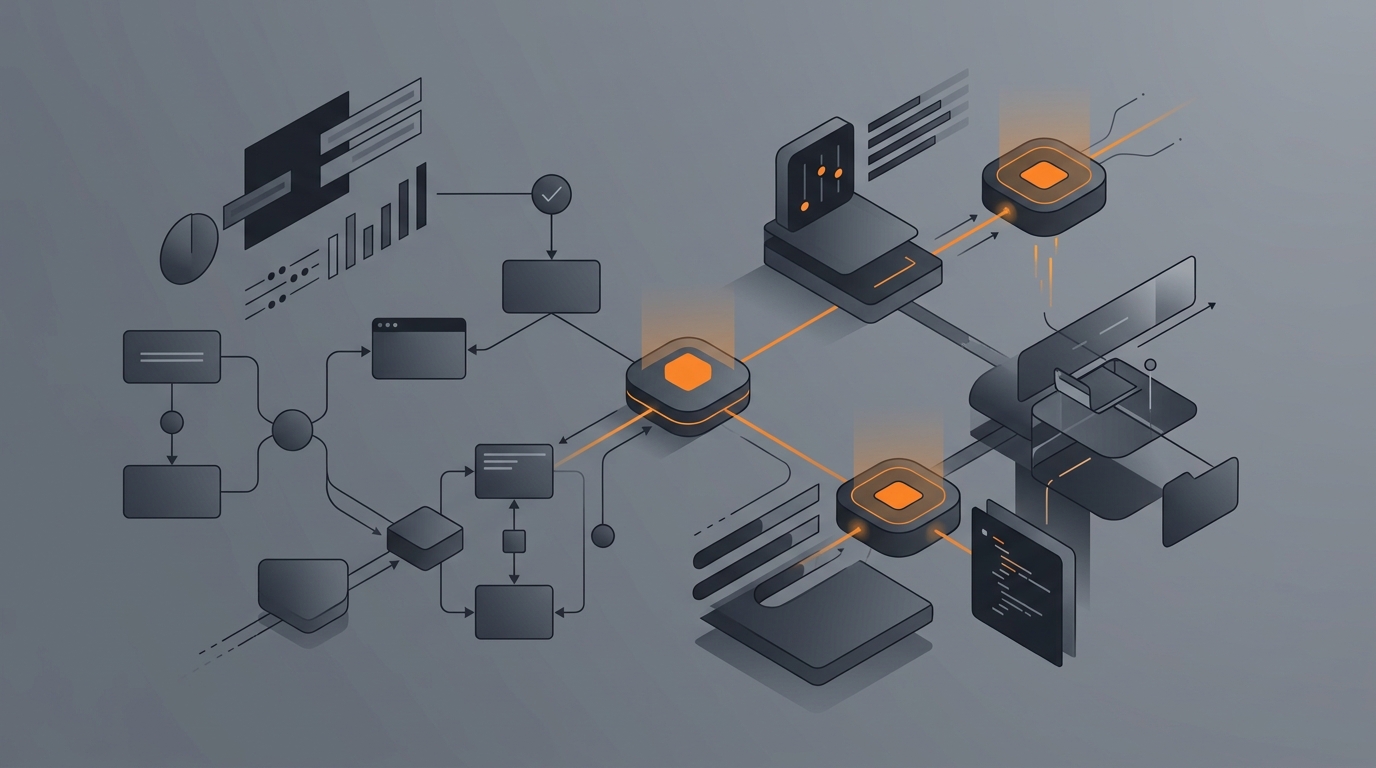
Best Zapier Alternatives Using AI in 2026: Real Agents, Not Steps
Update, 10 October 2026: on 6 October Zapier announced that Zapier Agents is now AI by Zapier. An agent's instructions, tools and trigger now live in one AI step inside a Zap. Approvals can be set per tool, and the…
Best Manus Alternatives in 2026: Recurring Agents, Not One-Off Tasks
Manus took off because it could pick up a vague task description and run a multi-hour autonomous session. That demo is impressive. The follow-up question buyers ask is "does it run every Monday at 9am for me,…

Best Lindy Alternatives in 2026: A Founder's Shortlist
Lindy markets itself as "AI employees" and ships a clean visual flow builder with strong defaults. Most "Lindy alternative" searches start because a buyer hit one of three things: pricing, the canvas being too much…
Best LangChain Alternatives for Non-Developers in 2026
If you have ever read the LangChain docs and thought "I just want the thing to work, not learn another framework," this list is for you. LangChain is a powerful Python library. It is for engineers. Non-developers who…

Best ChatGPT Workspace Agents Alternatives in 2026
ChatGPT Workspace Agents shipped in April 2026 and immediately changed the shortlist for any buyer evaluating "AI agents for my team." If your company is already on ChatGPT Business or Enterprise, agents are bundled…

Gravity vs TinyFish: Enterprise Web Agent vs Runtime (2026)
This comparison covers two products that buyers often line up against each other when they shouldn't. TinyFish is an enterprise web agent platform. Gravity is an outcome runtime. The labels look similar at a glance,…
Gravity vs OpenClaw: Browser Agent vs Outcome Runtime (2026)
This comparison covers two products that buyers often line up against each other when they shouldn't. OpenClaw is a browser-driven autonomous agent. Gravity is an outcome runtime. The labels look similar at a glance,…

Gravity vs MindStudio: AI App Builder vs Runtime (2026)
This comparison covers two products that buyers often line up against each other when they shouldn't. MindStudio is a no-code AI app builder. Gravity is an outcome runtime. The labels look similar at a glance, the…
Gravity vs Hermes Agent: Web Agent vs Outcome Runtime (2026)
This comparison covers two products that buyers often line up against each other when they shouldn't. Hermes Agent is a web browser autonomous agent. Gravity is an outcome runtime. The labels look similar at a…
Gravity vs Gumloop: Visual AI Workflow vs Runtime (2026)
This comparison covers two products that buyers often line up against each other when they shouldn't. Gumloop is a visual AI workflow builder. Gravity is an outcome runtime. The labels look similar at a glance, the…

Gravity vs Glean: Enterprise AI Search vs Runtime (2026)
This comparison covers two products that buyers often line up against each other when they shouldn't. Glean is an enterprise AI search and agents. Gravity is an outcome runtime. The labels look similar at a glance,…
Gravity vs Gemini: Google Assistant vs Outcome Runtime (2026)
This comparison covers two products that buyers often line up against each other when they shouldn't. Gemini is a Google AI assistant. Gravity is an outcome runtime. The labels look similar at a glance, the buyer…

Gravity vs Agent.ai: Marketplace vs Outcome Runtime (2026)
This comparison covers two products that buyers often line up against each other when they shouldn't. Agent.ai is an AI agent marketplace. Gravity is an outcome runtime. The labels look similar at a glance, the buyer…
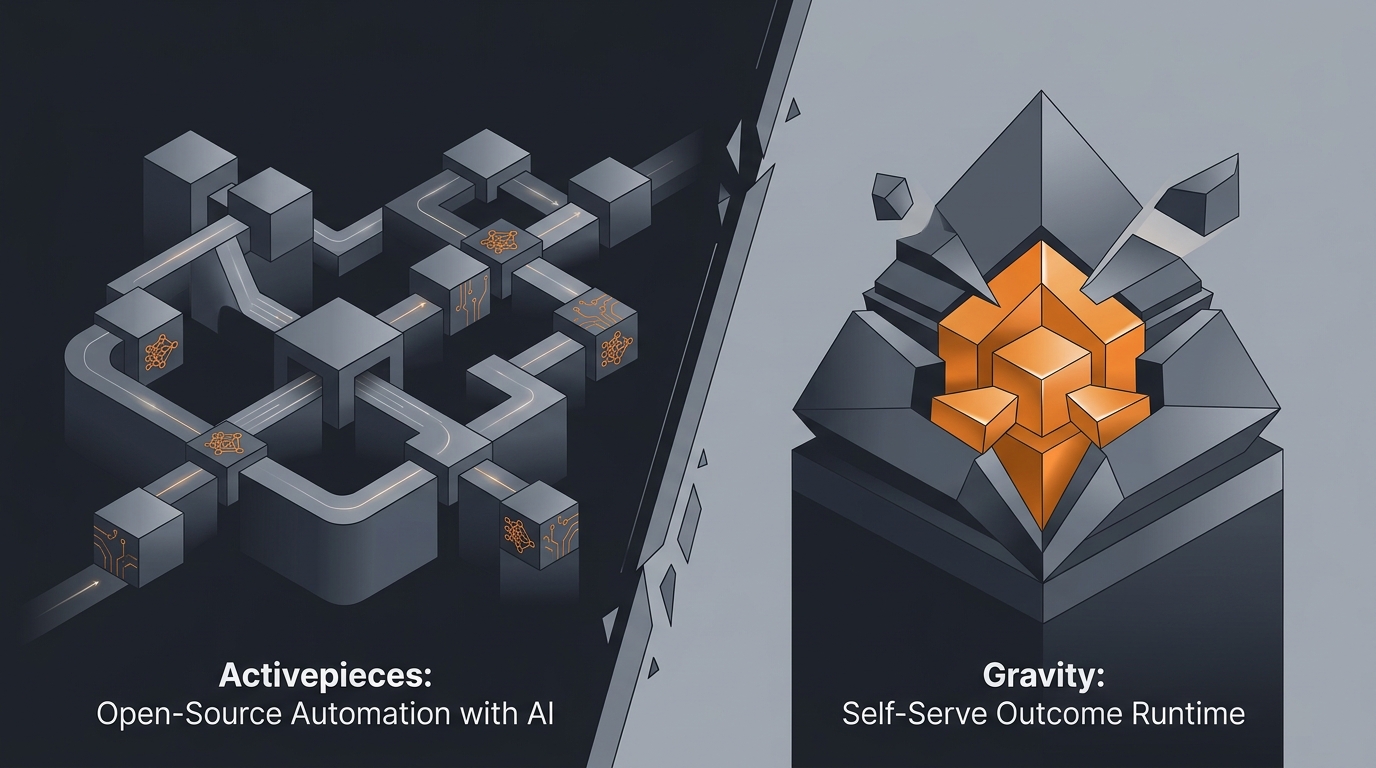
Gravity vs Activepieces: OSS Automation vs Runtime (2026)
This comparison covers two products that buyers often line up against each other when they shouldn't. Activepieces is an open-source workflow automation with AI. Gravity is an outcome runtime. The labels look similar…